U.S. Industrial Market Outlook: Turning Point Amidst Turbulence
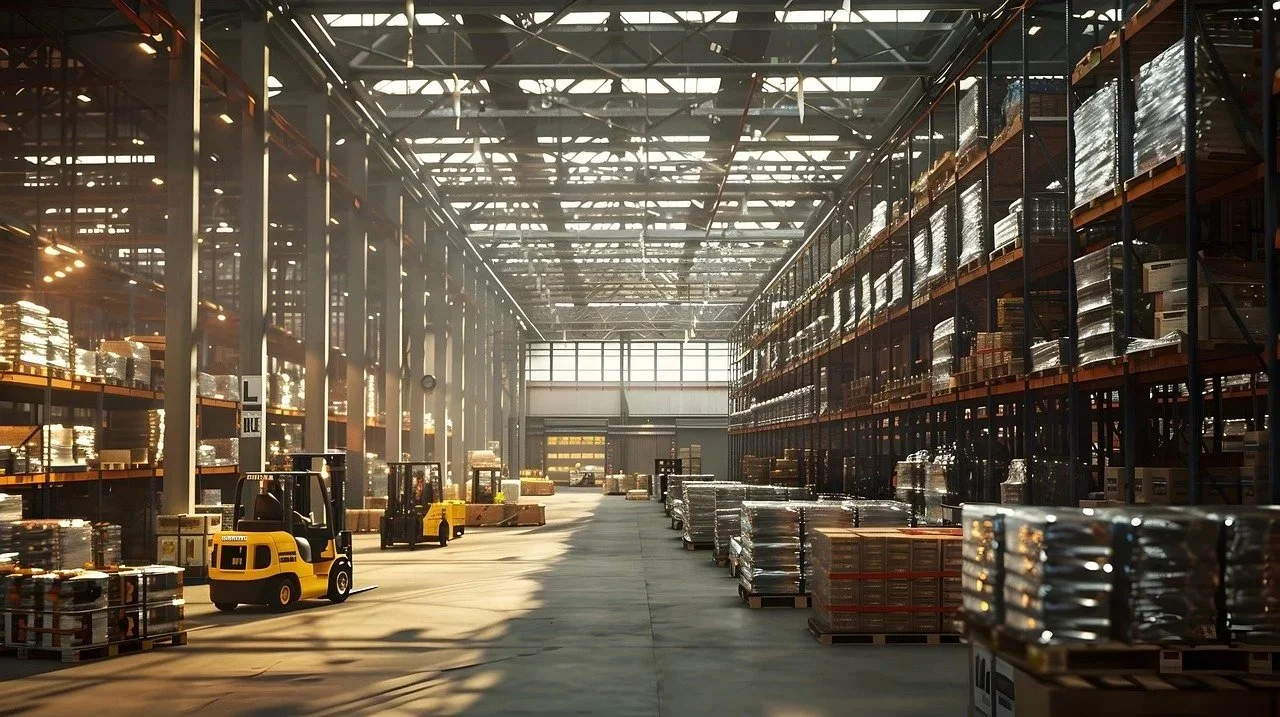
“Leases for more than 1.7 billion sq. ft. of space are scheduled to expire between 2026 and 2028.”
The U.S. industrial real estate sector, which surged during the pandemic as e-commerce and supply-chain expansion accelerated, is now approaching what could be its most significant reset in more than a decade. A record volume of leases signed in 2020–2022 is set to expire in 2026, coinciding with lingering supply overhang, diminishing demand for cornerstone occupiers, and uncertainty regarding U.S. trade policy. For most of 2025, muddled benchmarks held up pens, but emerging market insights frame resilience in shifting drivers and position 2026 as a structural recalibration for an evolving landscape.
Vacancy and demand carve the blueprint for redistribution, and selective expansion. According to CBRE’s Q3 2025 Industrial Figure report, overall vacancy reached 6.6% in Q3 2025, up significantly from the sub-4% levels seen at the height of the pandemic-era boom. Tariffs, supply-chain and inventory management complications, and timing constraints curbed industry demands, namely traditional retail and construction, machinery, and materials. Per JLL’s recent U.S. Industrial Tenant Demand Study, these declined 16.7% and 11.9% YoY, respectively. Despite vacancy’s upward drift, Q3’s figure quietly flattened out from Q2, showing signs of approaching peak vacancy. Steadying demand in lieu of overall warehouse and distribution requirements rose from manufacturing, e-commerce, and a rapidly-prevailing player: 3PLs. Propelling a 9.7% increase YoY in bulk leasing (100,000+ sq. ft.), 3PL, logistics and distribution, weighed in at 12.8% demand growth YoY in its fourth consecutive year just shy of 200 million sq. ft. Import flexibility, front-end capital preservation, and bandwidth to refocus on core competencies continued to win confidence in outsourcing to 3PLs. Simultaneously, manufacturing demand rose 9% YoY, with expectations to reach 30% of industrial demand by 2028. In stride, CBRE reported e-commerce’s share of total non-auto retail sales increased for the third consecutive quarter to 23.5%, with sights set on claiming 30% by 2031. As these divulging industries set the groundwork for the industrial market complexion ahead, Cushman & Wakefield’s December 2025 Instant Insight projects net absorption to increase by 25.5% in 2026.
Construction activity underscores corrective moderation and build-to-suit adaptations. As of Q3 2025, CBRE recorded roughly 226.9 million sq. ft. under construction nationwide - down substantially from the peak pipeline of more than 600 million sq. ft. in 2022. This marked the first quarter that activity fell below 230 million sq. ft. since Q3 2017, as developers confronted higher financing costs, labor shortages, slower lease-up velocity, and increased tenant selectivity. Savvy larger tenants adapted build-to-suit accommodations for automated logistics facilities; Cushman & Wakefield recorded a one-year high accumulating 104.7 million sq. ft. through Q3, indicating a shift towards long-term development strategy. Slowing starts following the digestion of speculative deliveries reinforce the likely stabilization of vacancy across the board in 2026, while leading markets like Dallas-Fort Worth and Phoenix continue to prime 12.4 million sq. ft. each of net absorption YTD with 40% and 27.4% of construction pre-leased.
Leasing activity remains the counterweight, with one clear winner. CBRE reported that year-to-date leasing volume through Q3 2025 totaled 682 million sq. ft., a 9.8% increase over the prior year. This is an essential data point: even as vacancy rose and construction slowed, tenant demand did not simply evaporate. Instead, occupiers recalibrated. Many relocated into newer, more efficient buildings or renewed - evaluating footprints in the face of automation, higher transportation costs, and new supply-chain strategies. In concurrence, pre-leasing activity remained above the post-pandemic average of 32.6% in both Q2 and Q3 2025, at 35.4% and 34.4%, indicating continued underlying demand for quality space. CBRE’s Industrial Occupiers’ Flight to Quality distinguishes contenders by building age: facilities delivered between 2023 and Q2 2024 absorbed roughly 395 million sq. ft., whereas assets built from 2000–2022 lost about 17 million sq. ft., and properties older than 25 years shed approximately 139 million sq. ft. over the same period.
Taken together, the data points toward a 2026 defined by normalization rather than disruption. Vacancy will likely drift modestly higher before stabilizing as the construction pipeline continues to shrink. Leasing activity should remain healthy, powered by e-commerce growth and 3PL expansion. The overarching story is a bifurcation: modern, well-located assets continue to see strong interest and positive absorption, while older buildings face rising vacancy and potential obsolescence. In a market shaped by operational efficiency, labor access, transportation costs, and fulfillment speed, the economics of industrial real estate increasingly reward quality, not simply square footage.
Sources:
CBRE Research. Q3 2025 U.S. Industrial Figure. CBRE, Inc., 2025. https://mktgdocs.cbre.com/2299/a468550c-8a6d-4074-bc37-39c57e9ea7d7-1724072023/Q3_2025_U.S._Industrial_Figure.pdf
Cushman & Wakefield. As Pipeline Levels Off, Inflection Point in Sight. 2025. https://sch.cushmanwakefield.com/api/public/content/fd077fcf4533487aac34ace27f33f120?v=33c9046a&_gl=1*1wo0pr0*_gcl_au*ODIzODY3MTg5LjE3NjUyNjI5NDI.*_ga*MjEyNDYyOTY4Mi4xNzY1MjM1MzA1*_ga_B63VJVKT85*czE3NjUyNjI5MzkkbzEkZzEkdDE3NjUyNjM4NzgkajUzJGwwJGgw*_ga_LM51XKPGE6*czE3NjUyNjI5MzkkbzEkZzEkdDE3NjUyNjM4NzgkajUzJGwwJGgw*_ga_D68R2GB427*czE3NjUyNjI5MzkkbzEkZzEkdDE3NjUyNjM4ODAkajUxJGwwJGgw
JLL Research. 2025-2026 Industrial Tenant Demand Study. Jones Lang LaSalle IP, Inc., 2025. https://www.jll.com/en-us/insights/industrial-tenant-demand-study?utm_source=chatgpt.com